6 New Muscle Building Rules
The science has changed how we think about reps, failure, range of motion, rest periods, volume, and frequency. Here’s how to put the new rules to work.

The science has changed how we think about reps, failure, range of motion, rest periods, volume, and frequency. Here’s how to put the new rules to work.

For decades, lifters have followed a familiar set of rules for building muscle. But over the past 10 years, research has challenged some of those ideas and given us a better understanding of what drives muscle growth.
That doesn’t mean the old methods were wrong; many of them worked. We simply know more now about why they worked, how to use them, and when a different approach may work just as well—or better.
Here are six new muscle-building rules based on what the latest research has taught us—and how I recommend applying them in your own training.
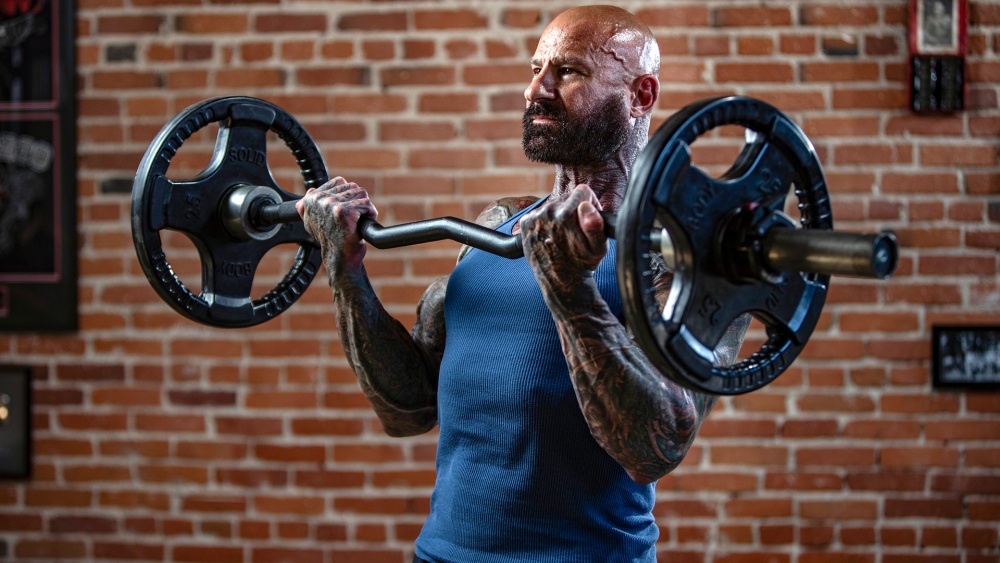
For years, 8–12 reps was treated as the muscle-building zone. Go below that range and you were supposedly training for strength; go above it and you were training for endurance. We now know the lines aren’t nearly that sharp.
Both acute research and longer-term studies that actually measure muscle growth show that a wide range of loads and rep ranges can build muscle. Heavy sets of 4–6 reps can work, and so can lighter sets of 20–30 reps, provided those sets are performed with enough effort.
What research hasn’t identified is one optimal rep range that builds the most muscle for everyone. Studies show that multiple rep ranges work, and decades of real-world bodybuilding back that up. The best range for you may depend on the exercise, the muscle being trained, your experience level, your joints, and how you personally respond. You can only determine that through consistent training and careful tracking.
That’s why when designing training programs I prefer to periodize my rep ranges instead of living in one narrow zone. At times I’ll go very heavy for 4–6 reps. At other times I’ll use a much lighter weight for 20–30 reps. I also spend plenty of time in the rep ranges between those two extremes.
This approach builds muscle while delivering other performance and health benefits. Heavy weight is better for maximizing strength, although it can also place more stress on the joints. Lighter weight improves muscular endurance and can be useful when you want to give your joints a break while still training hard. Rotating rep ranges lets you pursue hypertrophy without giving up strength, endurance, or longevity.
Takeaway Message: Don’t confuse one effective rep range with the only effective rep range. Use them all.
If all rep ranges can build muscle, there’s an important caveat: The set still has to be challenging enough to force the muscle to adapt.
Current research suggests that proximity to muscle failure matters for hypertrophy. The closer a set gets to the point where another rep is impossible, the more growth-producing stimulus it appears to provide. Research comparing failure and non-failure training doesn’t show that every set must go to absolute failure, but failure may become especially important when you’re using lighter loads .
To me, true muscle failure means you can’t budge the weight an inch from the start position. If your last full rep stops halfway up, the set isn’t necessarily finished. You may still be able to perform productive partial reps through the first half of the range of motion.
That distinction matters because full-range failure and complete muscular failure aren’t always the same thing. You can lose the ability to finish a rep while still having enough strength to move through its most productive portion. That brings us directly to rule number three.
Takeaway Message: Take at least one set of every exercise you do to muscle failure. But my definition of failure goes further than simply stopping when you can no longer complete another rep through the full range of motion.
Studies comparing different portions of an exercise’s range of motion have produced an important finding: Training the muscle in its lengthened, or stretched, position appears to be especially valuable for growth.
In many exercises, that’s the first half of the lifting phase—the bottom half of a squat or bench press, for example, or the portion of a curl that begins with the arm extended. Research has shown that people training only this lengthened portion can gain more muscle than those training only the shortened half. These reps are commonly called long-length partials.
This doesn’t mean you should abandon full-range reps. When long-length partials are compared with full-range training, the evidence doesn’t show a clear overall hypertrophy advantage for doing only partials. Full range of motion should still form the foundation your training.
The real value of this research is how it changes the way we define the end of a set.
Let’s say you reach the point where you can no longer complete a full rep. In the past, you might have stopped immediately and called
Related Articles

Use these nine nutrition rules to build more muscle with less fat.

Making high-protein meals that pack on muscle and fit your macros is simple – and fast – with these easy recipes.

If your gains have stalled despite training hard, your body may have adapted to your workouts. Here are the five programming mistakes that hold experienced lifters back—and how to fix them.
_4615.jpg)
She stopped chasing the scale, started chasing strength, and kicked off a transformation with the Super-Man Challenge workout=.
Foundations

Featured Meal Plans

Muscle Hypertrophy: Build Muscle Fast
Rethink Your Rep Range

The Science of Strength Bands
Training
Nutrition
Supplementation
Health