7 Bench Press Rules for Strength vs. Chest Growth
Your setup, grip, range of motion, and reps should reflect what you’re training for. Here’s how to bench for more strength—or a bigger chest.

Your setup, grip, range of motion, and reps should reflect what you’re training for. Here’s how to bench for more strength—or a bigger chest.

The bench press can help you build a stronger upper body or a bigger chest. But those goals don’t always call for the same approach. You’ll press the bar in both cases, but your setup, effort, and focus can change how you perform the lift—and which muscles do more of the work.
The chest is the main target of the bench press, but your front delts and triceps help move the bar, too. If those muscles take over when your goal is chest growth, you may need to adjust how you bench.
Here are seven rules I use to tailor the lift to the result I’m after.
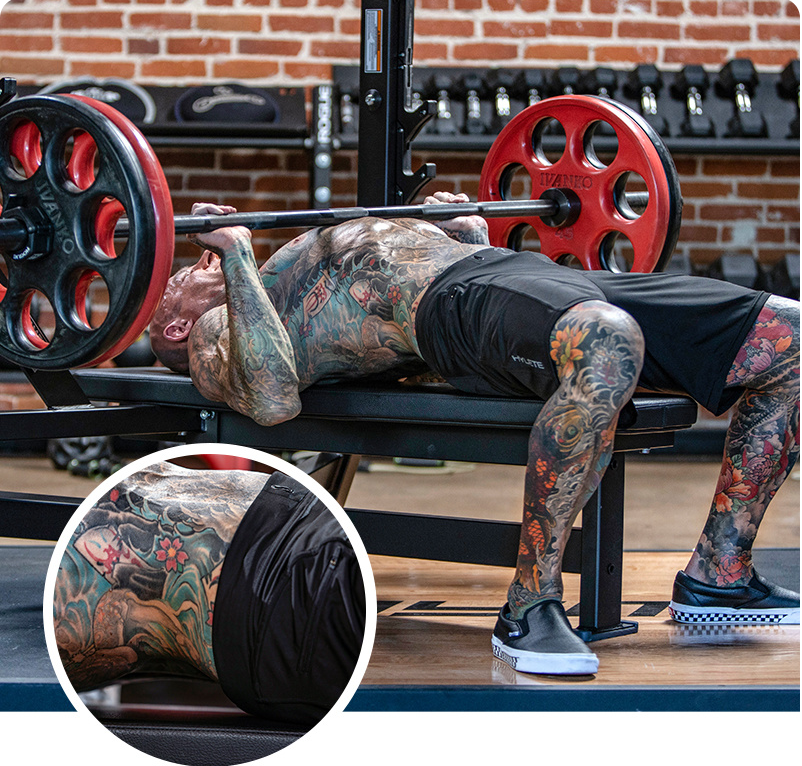
I start with five points of contact : my feet, glutes, upper back and shoulders, head, and hands. A stable setup gives me a firm base to press from and helps me repeat the same movement from rep to rep.
For a strength focused bench press, pull your feet back toward your hips while keeping them planted on the floor. Press them into the ground as you lift, but keep your glutes on the bench. If your hips rise, the rep doesn’t count in a powerlifting competition—and you’ve changed the movement.
Next, pull your shoulder blades back and down into the bench. This gives your upper body a firm base and helps you keep your chest in position. Keep your head on the bench, too. I like the cue of gently pressing your head back into the pad as you press the bar.
Your position may look a little different when chest growth is the priority, but the basics still apply: Keep your glutes down and your shoulder blades pulled back and down. That stable upper-back position can help keep the pecs involved instead of letting your shoulders roll forward.
For strength, create a stable base with your feet, glutes, upper back, and head planted. For chest growth, keep your glutes down and shoulder blades pulled back and down.
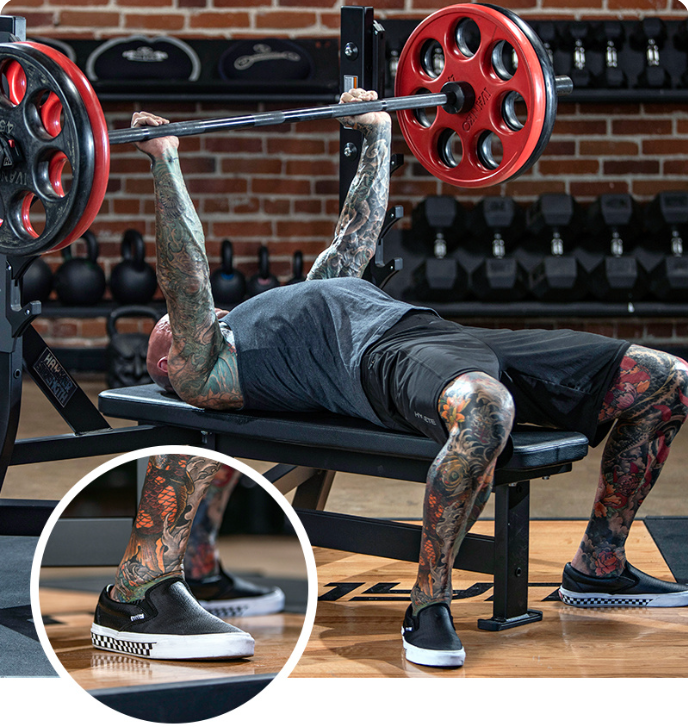
For strength, I prefer to keep my feet flat and planted. Some lifters—particularly shorter lifters—may find it easier to get a solid base with their feet on the balls of their feet. Either way, your lower body helps you stay stable as you press.
When chest growth is the goal, foot position is more flexible. One study found greater chest muscle activity when lifters benched with their legs raised than when they kept their feet on the floor. That’s an acute measure of muscle activity, though, and it doesn’t tell us by itself which position will lead to more long-term growth. Choose a position that lets you press comfortably and consistently.
Your back arch matters, too. For strength, an arch can help create a strong base and reduce the distance the bar has to travel. But if you’re training for chest growth, you don’t need to exaggerate it. A very large arch can shorten your range of motion and change the angle of your torso, which may make it harder to emphasize the upper and middle chest.
Keep your glutes on the bench, maintain your upper-back position, and use only as much arch as you need to feel stable.
For strength, plant your feet and use a comfortable arch. For chest growth, foot position is flexible; avoid an exaggerated arch that shortens your range of motion.
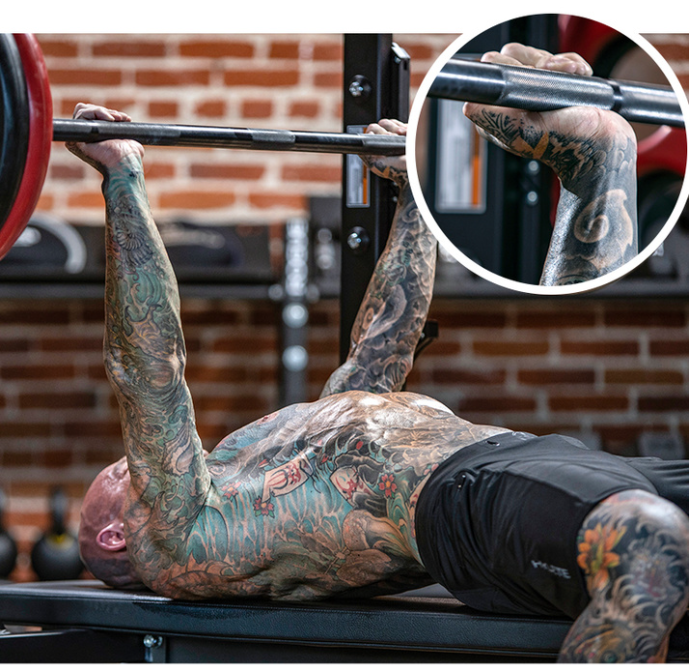
Grip width affects how the bench press feels and which muscles contribute to the lift. For strength, I use a grip that’s about one and a half times my biacromial width —the distance between the bony points at the top of your shoulders. Measure that distance, then multiply it by 1.5 to get a starting point. You may need to adjust slightly to find a position that feels strong and comfortable.
When training more for growth and/or to develop a certain areas of the chest, a wider grip may help emphasize the middle of the pecs, while a closer grip may involve more shoulder flexion and put more emphasis on the upper chest. You can also try a reverse grip to shift the work toward the upper pecs. Start light when trying a
Related Articles

Perfect your technique on the reverse-grip bench press to maximize upper chest development.

Press for maximum strength, size, and safety by following these key technique cues.

Bench pressing is a foundational exercise for building upper body strength. Ensure proper form by maintaining five points of contact: feet, glutes, upper back, head, and hands. Proper technique maximizes gains and minimizes injury risk.

A simple shoulder blade position can reduce joint stress and lower injury risk.
Foundations
Featured Meal Plans
Muscle Hypertrophy: Build Muscle Fast
Rethink Your Rep Range
The Science of Strength Bands
Training
Nutrition
Supplementation
Health