Build Muscle in Half the Time With Supersets
Superset a push exercise with a pull exercise to make your workouts more efficient—and potentially get more reps with the same weight.

Superset a push exercise with a pull exercise to make your workouts more efficient—and potentially get more reps with the same weight.

If you’ve ever wondered whether you can pair a given exercise with another in a superset to save time in your workout, the answer is almost always an emphatic YES.
Let’s take Smith machine rows and a chest exercise, for example. Again, you can absolutely superset these two moves. In fact, that kind of pairing is a regular part of how I train. Supersets are one of the simplest ways to make a workout more efficient, and research suggests they can help you get more work done in less time.
You can get the same results in almost half the amount of time in the gym with supersets.
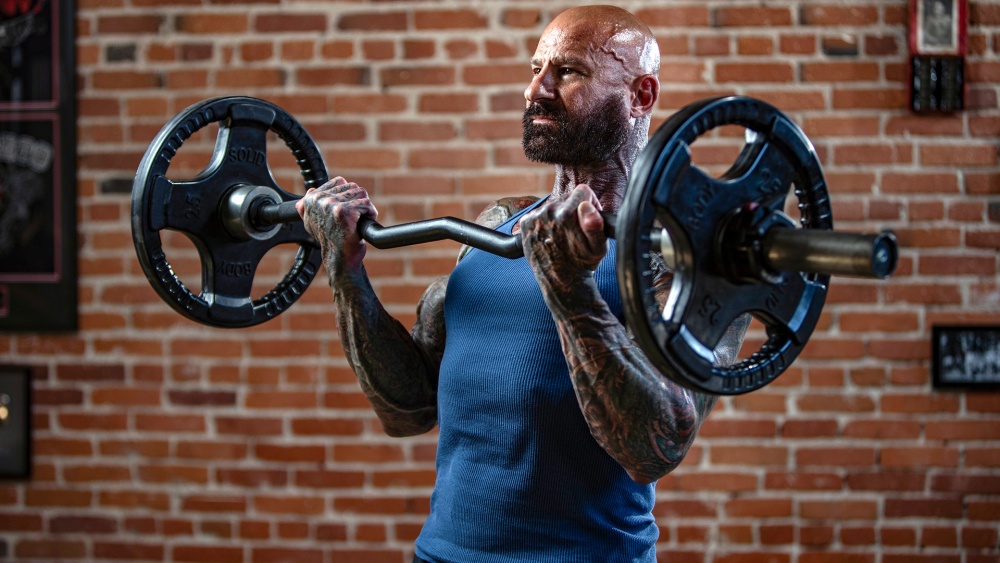
A superset means performing one exercise and then moving directly to a second exercise before taking a rest. One of my favorite ways to do it is to pair opposing muscle groups: a push with a pull. That can mean bench presses followed by rows, or biceps curls followed by triceps extensions.
Here, I’ll explain how supersets work, what the research says about them, and how to use push-pull pairings to make your workouts more efficient.
First, let’s compare standard straight sets with supersets.
With straight sets, you might do a set of bench presses, rest for a couple of minutes, and then do your next set. With a push-pull superset, you finish the bench press and go right into a row. Your chest gets a chance to recover while your back works.
Pair a push with a pull—like a chest press and a row—so one muscle group can recover while the other works. If you can, choose exercises that use the same station to keep the superset practical in a busy gym.
You might assume that bench pressing first would leave you too tired to do a good set of rows. But your chest does relatively little during a row, so it’s resting while you train your back. That’s the idea behind an agonist-antagonist superset: You pair exercises that work opposing muscle groups, such as chest and back. Research reviews that combine findings from multiple studies have found that these pairings can produce results at least equivalent to straight sets. In some cases, people completed more reps with the same weight.
That’s a big reason I use supersets in my workouts and include them in my programs so often. They let me get more training done without spending as much time in the gym—and more reps with a given weight can support progress in strength and muscle growth.
Start with two exercises that train opposing muscle groups. A chest exercise paired with a back exercise is a classic example. You can also pair a biceps curl with a triceps extension: one movement pulls, the other pushes.
Then move from the first exercise to the second with as little downtime as your setup allows. If you’re benching and rowing on a Smith
Related Articles

Transform your physique with Jim Stoppani’s 6 Week Bodybuilding Program for 2025

You don’t need a cabinet full of supplements to build muscle. If money's tight, these are the three I'd prioritize.

The best workout split has less to do with age than with your training experience, goals, and recovery.

These supported variations let you train your back without having to hold a bent-over position.
Foundations
Featured Meal Plans
Muscle Hypertrophy: Build Muscle Fast
Rethink Your Rep Range
The Science of Strength Bands
Training
Nutrition
Supplementation
Health