Paused Bench Press: Is It Better for Strength or Chest Growth?
A pause at the bottom of a bench press can make the lift harder and help you train your chest in a stretched position. Here’s how to use paused reps for strength, muscle growth, or both.

A pause at the bottom of a bench press can make the lift harder and help you train your chest in a stretched position. Here’s how to use paused reps for strength, muscle growth, or both.

The bench press can change dramatically in the space of one second. Lower the bar and press right back up, and you get a little help from the rebound (and in some guys’ cases, a clear bounce off the chest!). Hold it still on your chest for a one-second pause, and that help disappears. Suddenly, the hardest part of the rep gets a lot harder.
That pause can expose a weak spot, sharpen your technique, and make your chest work from a stretched position. But harder doesn’t automatically mean better for muscle growth—and the best choice depends on what you’re training for.
So, should you do a pause at the bottom of your bench press to build strength, grow your chest, or both? Let’s look at what changes at the bottom of the lift and how to use paused reps in your program.
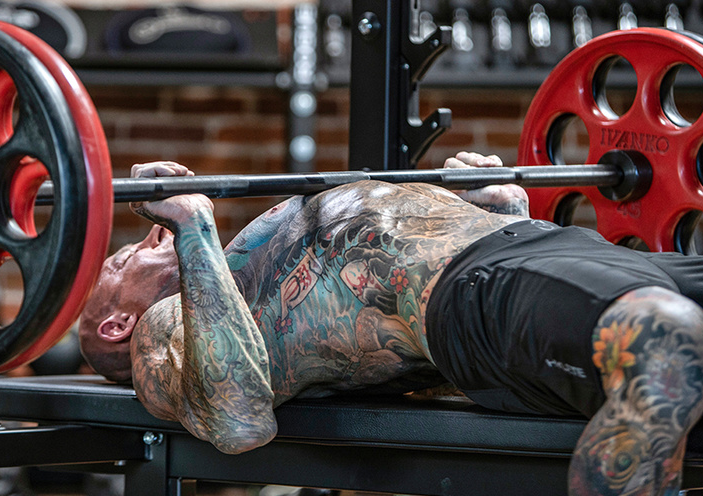
A paused bench press is exactly what it sounds like: You lower the bar to your chest, stop, hold briefly, and then press it back up. The pause should be controlled. Don’t relax or let the bar sink into your chest.
That’s different from rest-pause training , where you perform a set close to failure, rest briefly, then squeeze out a few more reps. In a paused bench press, the brief hold happens at the bottom of each rep.
You should also avoid bouncing the bar off your chest. Bouncing can help you move more weight, but it takes control away from the bottom of the lift. A pause makes you start the press without that rebound.
Often you’ll see strength and conditioning coaches and trainers include a four-number “code” for big lifts like the bench press. For example, 2-0-2-0. Those four numbers represent, in this order, the number of seconds you’ll take to lower the weight (first number); how long you’ll pause at the bottom (second number); how many seconds the positive/concentric portion should take (third number); and how many seconds you’ll pause at the top before going into the next rep.
In the example above, the second number being zero tells you that there’s not a pause at the bottom. But if it said 2-1-2-0, that would call for a one-second pause at the bottom but still no pause between reps.
If you compete in powerlifting, paused bench presses are essential. In competition, you have to hold the bar motionless on your chest before pressing it up; the judges literally sound a beep/bell when you’re allowed to press back up. Practicing that pause helps you build strength in the position where you need it.
Even
Related Articles

A simple shoulder blade position can reduce joint stress and lower injury risk.

Your setup, grip, range of motion, and reps should reflect what you’re training for. Here’s how to bench for more strength—or a bigger chest.

The right bench press grip can help you emphasize different areas of your chest. Here’s how I choose between a wider and narrower hand position.

Stopping just short of your chest can still build muscle—but your goal and your technique matter.
Foundations

Featured Meal Plans

Muscle Hypertrophy: Build Muscle Fast
Rethink Your Rep Range
The Science of Strength Bands
Training
Nutrition
Supplementation
Health